
How Remote Hands Support Empowers Moroccan Businesses
In a nutshell: For companies across Morocco, remote hands support bridges the gap between your digital strategy and your physical IT infrastructure. Here’s how it ensures continuity, controls costs, and provides expert local help from Casablanca to Tangier.
Running a modern business in Morocco’s dynamic economy means your operations depend on a complex IT backbone. Servers, networks, and security systems are your digital nervous system.
But what happens when you face a physical problem? A server needs a hard reboot, a cable fails, or new hardware must be installed. These issues can’t be fixed with a software update. This is where remote hands support moves from a nice-to-have to a genuine necessity for keeping your business running.
At a Glance: Traditional vs. Remote Hands Support
| Scenario | Traditional Model | With Remote Hands Support |
|---|---|---|
| Server requires physical reboot | Hours or days of downtime waiting for internal staff to travel. | Local technician dispatched, service restored often within the hour. |
| New hardware installation | Project delays, reliance on untrained internal staff. | Expert, guided installation completed efficiently and correctly. |
| Emergency cable fault diagnosis | Extended network outage impacting operations and revenue. | Rapid on-site diagnosis and physical repair to minimize disruption. |
| Ongoing infrastructure audits | Neglected, leading to hidden risks and chaotic cable management. | Scheduled preventive maintenance ensures health and organization. |
What Is Remote Hands Support? Extending Your Team’s Physical Reach
Think of remote hands support as a service that gives you trusted, on-site technicians at your data center, server room, or office. They act on your precise instructions. You manage the technical strategy from wherever you are; they handle the physical tasks locally.

It’s like extending your team’s capabilities to solve the “last mile” problem of IT—when you absolutely need someone to be there in person.
The Core Concept: Your Eyes, Ears, and Hands On-Site
Imagine you manage a logistics operation in the Tangier port zone. A critical network switch fails. You know the solution, but you’re hours away. With remote hands support, you call your provider.
A certified technician is dispatched. You guide them via a secure call: “Locate rack C, replace the top switch with the spare unit, and power it on.” They become your physical proxy, performing the task with precision under your direction.
How It Differs from Standard Remote IT Support
This distinction is important. Standard remote IT support involves technicians accessing your systems over the internet to fix software or configuration issues.
Remote hands support is for the tasks that a network connection can’t solve. It addresses the physical layer: hardware, cables, and environmental checks. One solves digital problems; the other solves physical ones.
Note: For a deeper understanding of the standards governing professional data center operations where remote hands are often deployed, you can refer to established frameworks like the ANSI/TIA-942 standard for data centers.
Key Services Included in a Remote Hands Package
A comprehensive remote hands service covers a wide array of physical tasks:
- Hardware Handling: Installing, mounting, or replacing servers, switches, and storage devices.
- Basic Diagnostics: Visual inspections, reading status LEDs, connecting console cables for remote teams.
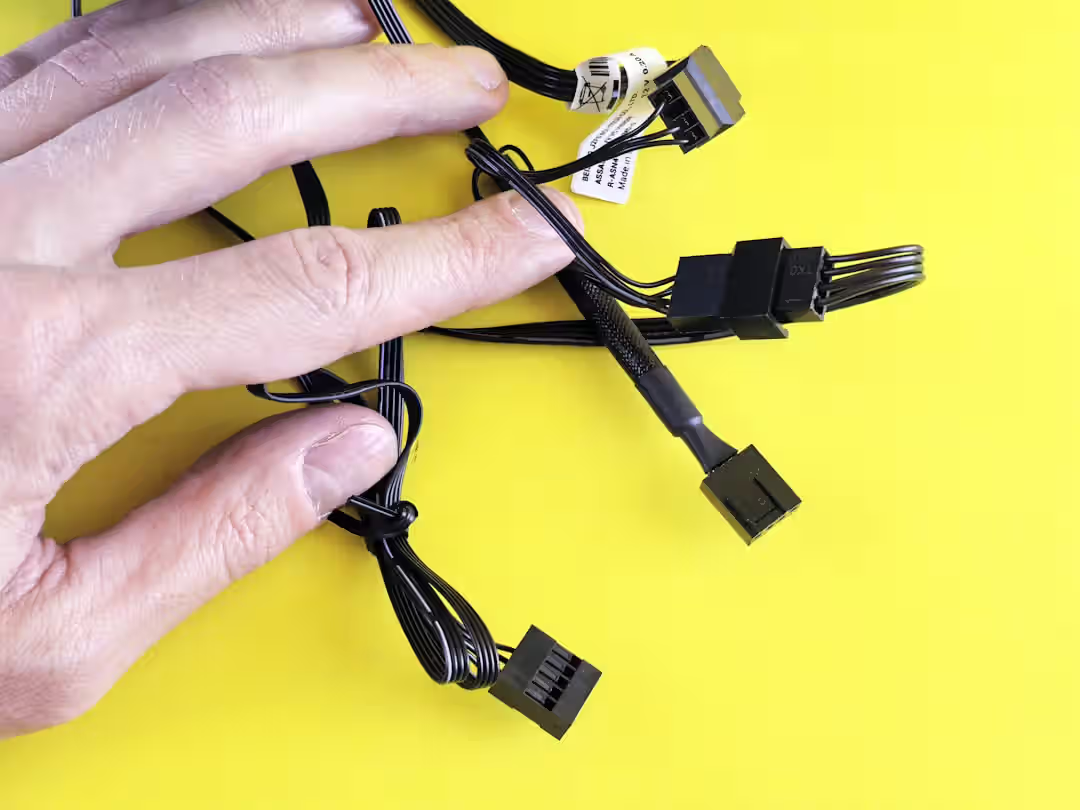
- Cabling Work: Running, tracing, testing, and patching network and fiber cables.
- Reboots and Power Cycles: Physically restarting unresponsive equipment.
- Inventory Management: Labeling equipment and performing physical asset audits.
- Facility Checks: Verifying power, cooling, and environmental conditions.
How Remote Hands Support Saves Moroccan Businesses Money and Time
The economic and operational benefits for Moroccan companies are clear and directly tackle local challenges.

Slashing Downtime and Ensuring Business Continuity
Downtime is lost revenue. For a Casablanca-based financial services firm or a Marrakech hotel’s booking system, every minute offline counts. Having a local technician intervene cuts resolution times from days to hours, protecting both your operations and your reputation.
This rapid response is a cornerstone of effective remote hands support.
The Cost-Effective Alternative to Full-Time On-Site Staff
Hiring a full-time IT engineer for every location—a warehouse in Bouskoura or a retail branch in Fes—is a major expense. Remote hands give you expert help on a pay-as-you-need basis.
You avoid the salaries, benefits, and training costs for a role that might not need a full-time workload.
Bypassing Geographical and Travel Delays
Morocco’s geography means inter-city travel takes time. If your IT manager is in Rabat and a server fails in Agadir, you lose a day before work even begins. A provider with local technicians sidesteps these delays entirely.
You get the right expertise, right where and when you need it.
Enhancing Security, Compliance, and Audit Trails
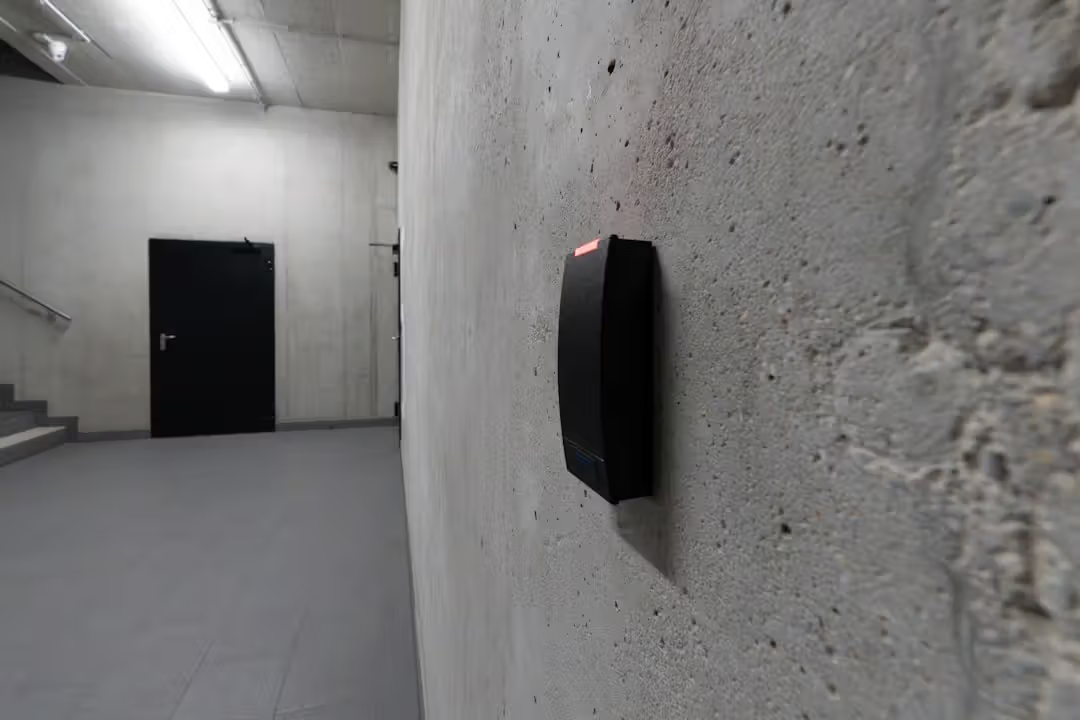
Reputable providers operate with strict protocols. Technicians are vetted, they use secure access methods, and they provide detailed logs of every action. This creates a controlled audit trail for compliance, which is far better than using untrained staff or multiple vendors.
Local Advice: For businesses in Morocco sourcing new hardware for projects, partnering with a reliable local supplier like ITV.ma for equipment can streamline the process. Your remote hands team can then handle the physical deployment and configuration.
When to Implement Remote Hands Support: A Practical Checklist
How do you know it’s time? Use this simple checklist to evaluate your needs.
- Frequent Physical Interventions: You often need “someone to press a button” or swap a component.
- Excessive Staff Travel: Your IT team spends too much time driving between sites for simple tasks.
- Project Delays: Hardware upgrades get postponed because you lack installation resources.
- Disorganized Infrastructure: Server rooms or network closets are chaotic and hard to manage.
- After-Hours Gaps: You have IT needs when your internal staff is unavailable.
- Multi-Site Operations: You have several locations without dedicated on-site IT personnel.
Industry-Specific Applications Across Morocco
Different sectors use remote hands in their own ways:
| Industry | Typical Remote Hands Tasks |
|---|---|
| Finance (Casablanca) | Ensuring uptime for trading platforms, secure hardware maintenance, and audit-ready physical logs. |
| Logistics (Tangier Med) | Supporting warehouse management systems, network gear in harsh environments, and CCTV for security. |
| Tourism & Hospitality (Marrakech) | Maintaining property management systems, Wi-Fi networks, and POS systems across large resorts. |
| Multi-Branch Retail | Providing consistent physical IT support for all locations without on-site staff at each store. |
Practical Insight: “The shift to hybrid work revealed a critical gap: who handles the physical layer when your IT team is distributed? Remote hands support fills that gap, ensuring your digital strategy isn’t halted by a physical loose end.” – A perspective from our ITech Valley blog on modern IT resilience.
Choosing the Right Remote Hands Provider in Morocco
Selecting a partner requires careful thought. Focus on these key factors.

Key Qualifications, Certifications, and Response Times
Look for technicians with certifications from major vendors (Cisco, Dell, etc.). More importantly, scrutinize their Service Level Agreement (SLA). What is their guaranteed emergency response time for your city? Make sure it matches how critical your operations are.
Non-Negotiable Security Protocols and Communication Standards
Ask detailed questions about technician vetting, site access authorization, and activity logging. You should receive a comprehensive report after every visit. Clear communication channels for issuing instructions are vital.
“The most cost-effective IT strategy combines smart remote management with ready local physical support. It’s about acknowledging that while software is global, hardware is always local.”
Setting Up Your Remote Hands Support for Success
Preparation is key. Start with a full site audit to create shared documentation. Establish formal access procedures and an emergency contact list. Proactively schedule regular maintenance, not just emergency calls.
Tip: Effective IT service management, which includes coordinating remote hands, follows established best practices. Frameworks like ITIL (Information Technology Infrastructure Library) provide guidelines for integrating these services into your overall IT strategy.
Common Mistakes to Avoid with Remote Hands Support
Learn from common oversights to ensure a smooth partnership.

- Poor Documentation: Sending a technician to an undocumented site wastes time and increases the risk of errors.
- Weak Access Logistics: If the technician can’t get in, the service fails. Plan access meticulously.
- Fire-Fighting Only: Using the service only for emergencies is costly. Combine it with preventive care.
- Choosing on Price Alone: The cheapest option may lack certifications, security rigor, or reliable response times.
Useful Resources for Businesses in Morocco
Expanding or managing operations across Morocco involves more than IT. For insights on logistics, regional business culture, and navigating different cities, resources like Morocco Navigator can provide valuable local context. For comprehensive IT service planning that integrates remote hands, exploring providers like ITech Valley Morocco can be a strategic step.
Conclusion: Building a Resilient IT Foundation with Remote Hands
For Moroccan businesses aiming for growth and stability, remote hands support is a strategic enabler. It transforms physical IT challenges from business risks into managed, routine operations.
By providing expert local intervention, it ensures your digital ambitions are never limited by geography or logistics. Investing in this layer of support builds a more resilient, cost-effective, and agile IT foundation for the future.
Ready to see if remote hands support is right for you? We offer a free, no-obligation consultation to analyze your infrastructure and identify where local physical IT support could strengthen your business. Contact us to schedule your assessment.
Frequently Asked Questions (FAQs)
What exactly does “remote hands support” mean?
Remote hands support refers to a service where a provider dispatches a technician to your physical location to perform specific hardware-related tasks under your remote direction. It’s your extended physical IT team on the ground.
How quickly can a remote hands technician typically respond in major Moroccan cities?
Response times vary by provider and service level agreement (SLA). In major hubs like Casablanca, Rabat, and Marrakech, premium services often offer emergency response within 2-4 hours. Always clarify and contract the guaranteed SLA for your specific city.
Is remote hands support secure? How is access to my server room controlled?
Reputable providers enforce strict security: technicians are vetted, access requires multi-factor authorization from your team, and all activities are logged and reported. You maintain control over who enters and what they do.
Can remote hands support help with planned projects, not just emergencies?
Absolutely. A key benefit is supporting planned work like server migrations, hardware refreshes, and structured cabling projects. This ensures complex physical deployments are handled expertly and on schedule.
Leave a Reply